
FPGA Tutorial
Learn FPGA design with clear Verilog, VHDL and SystemVerilog tutorials
Practical, source-checked guides for students and working engineers: language tutorials with runnable ideas, plus honest buying advice for the laptops and equipment that FPGA and electronics work actually needs.
Choose a learning path
Each hub lists its tutorials in a sensible reading order. New to hardware description? Begin with the FPGA basics, then pick one language. A longer plan is on the Resources page.
Getting started with FPGA development
How synthesis, place and route, timing analysis and verification fit together, before you write any code.
Verilog tutorials
Modules, data types, operators, always blocks, testbenches, tasks and functions, generate and parameters.
VHDL tutorials
Types and conversions, signal assignments, process blocks, testbenches, subprograms, generics and generate.
SystemVerilog tutorials
Data types, arrays, always_ff and always_comb, loops, typedef, enum and struct, functions and tasks.
Latest articles
Our newest tutorials and guides appear here automatically.
-

Best Laptops for Electrical Engineers for 2027
Compare five exact Amazon US laptops for electrical engineering. Choose based on course GPU rules, Vivado and MATLAB needs, portability and upgrade cost.
-
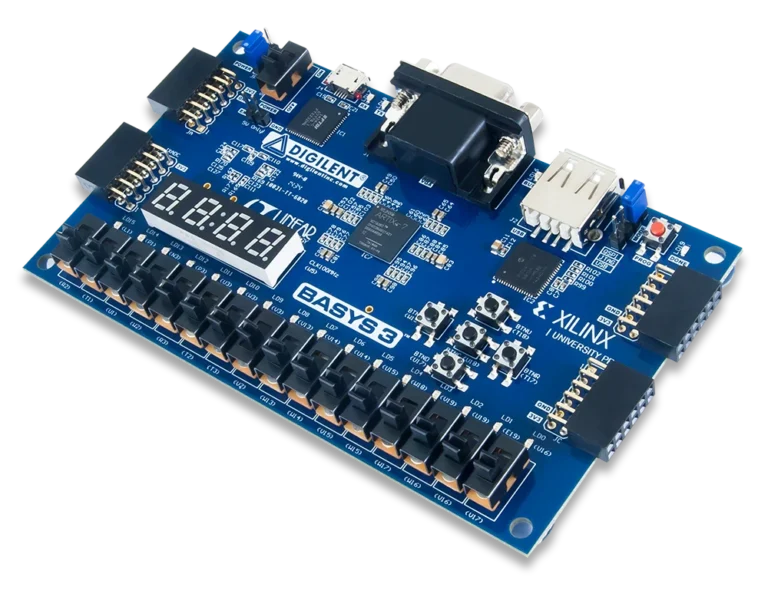
Best FPGA Development Boards for Beginners and Students (2027)
The best FPGA development boards for beginners and students, matched to coursework, toolchain and budget: Basys 3, Nexys A7-100T, Arty A7-100T, Zybo Z7-20 and Tang Nano…
-
Using Generate and Parameters to Write Reusable SystemVerilog Designs
Learn how to write SystemVerilog which can be reused across multiple designs by using parameters and generate statements.
-
Creating Custom Types in SystemVerilog using Typedef, Enum and Struct
Learn how to create custom data types in SystemVerilog based designs and test benches using the typedef, enum and struct keywords
-
An Introduction to Tasks in SystemVerilog
Learn how to use tasks in SystemVerilog in order to write more efficient code which can be reused across multiple designs and testbenches.
-

An introduction to SystemVerilog Operators
Learn about the SystemVerilog operators and how they can be used together with the assign keyword to model basic combinational logic circuits
-
If Statements and Case Statements in SystemVerilog
Learn how to use two of the most common sequential statements in SystemVerilog programming – the if statement and the case statement
-

An Introduction to Loops in SystemVerilog
Learn how to use all of the different types of loop in SystemVerilog – the for loop, foreach loop, while loop, repeat loop and forever loop
-
Getting Started with FPGA Development
An introduction to the FPGA development process featuring a detailed discussion of the synthesis, place and route, timing and verification
-

Using the Always Block to Model Sequential Logic in SystemVerilog
Learn how to use the always block in SystemVerilog, including the improved always_ff, always_comb and always_latch blocks
-

Continuous Assignment and Combinational Logic in SystemVerilog
Learn how to use continuous assignment statements in SystemVerilog in order to model the behavior of basic combinational logic circuits
-
SystemVerilog Dynamic Arrays and Queues
Learn how to make use of dynamic arrays, queues and associative arrays in SystemVerilog based test benches for FPGA design
Engineering buying guides
Laptop, workstation and lab-equipment advice that starts with your software and course requirements, not with a spec sheet.
-
Best Laptops for Electrical Engineers for 2027
Compare five exact Amazon US laptops for electrical engineering. Choose based on course GPU rules, Vivado and MATLAB needs, portability and upgrade cost.
-
Best FPGA Development Boards for Beginners and Students (2027)
The best FPGA development boards for beginners and students, matched to coursework, toolchain and budget: Basys 3, Nexys A7-100T, Arty A7-100T, Zybo Z7-20 and Tang Nano…
Some guides contain affiliate links. As an Amazon Associate I earn from qualifying purchases. A commission never decides what we recommend; see our Affiliate Policy.
Who writes and checks FPGA Tutorial

Ayesha Harris
Editor in Chief
Ayesha is a technical product manager and a former Senior Editor covering CPUs, GPUs and AI news at PCMag (2020 to 2023), with earlier experience as a search analyst for tech news at Yahoo. She sets the editorial standards here: clear explanations, primary sources, and a firm line between researched comparisons and hands-on testing. FPGA Tutorial is owned by Omar Khan.
Editorial oversight does not mean Ayesha wrote or tested every article. Where an article names an author or technical reviewer, that credit describes the work they actually did.
How we keep recommendations honest
Sources first
Software compatibility, device limits and specifications come from current vendor documentation, and we name the release or configuration that changes the answer.
Testing means testing
A researched comparison is labelled as research. We only say something was tested when the machine, workload, version and method are documented.
Corrections welcome
Found a mistake in an explanation, a code example or a recommendation? Send the article URL and the details, and we will assess it on the evidence.
Not sure where to begin?
The Resources page puts our tutorials in a suggested order for beginners.